
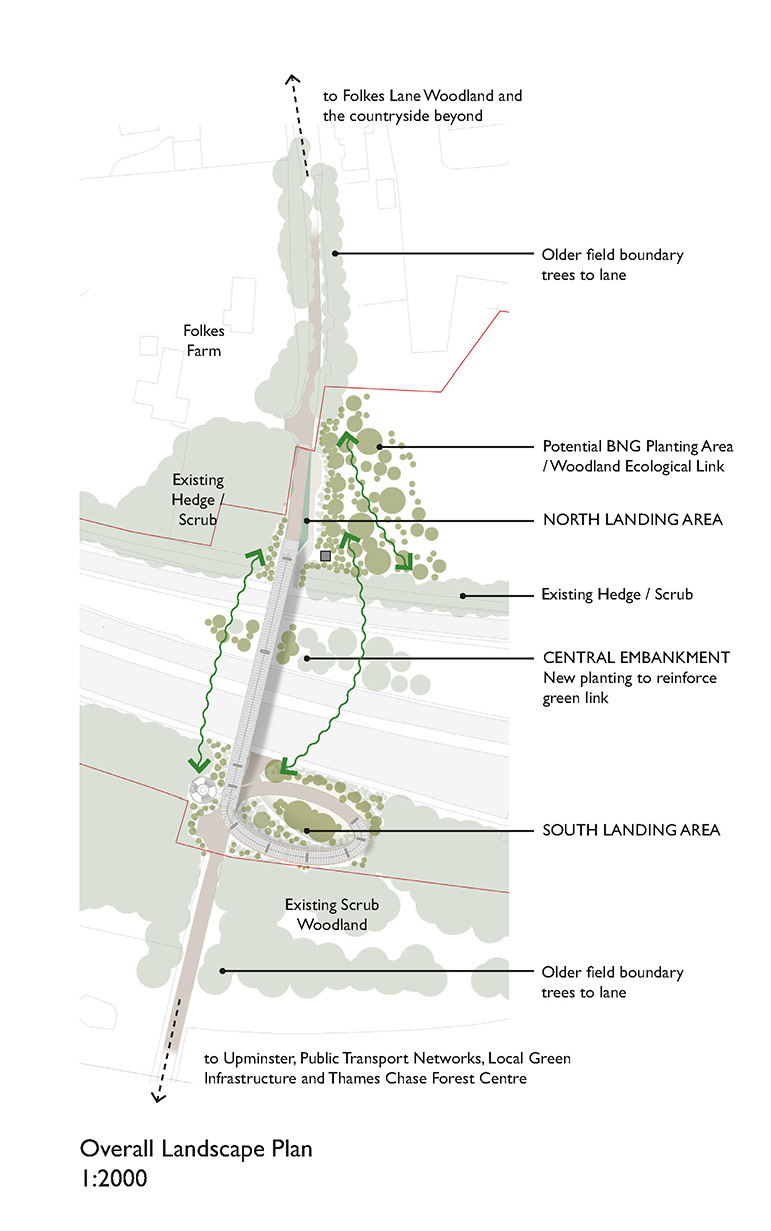
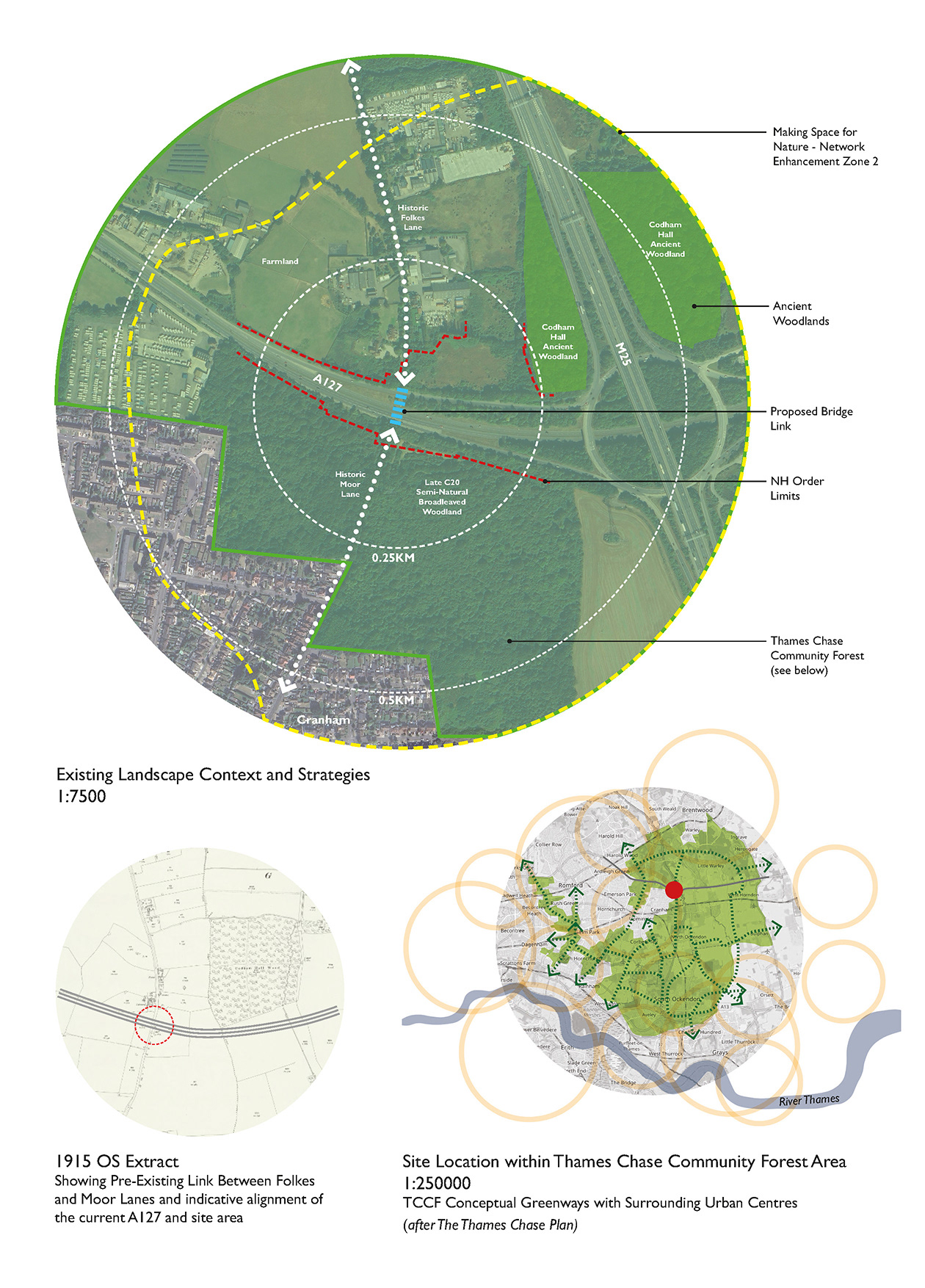
The landscape draws on the site's historical context and the natural character of the Northern Thames Basin, aligning with broader goals for landscape regeneration and nature recovery. Key concepts include re-establishing historic green routes, integrating low-carbon design principles, and supporting biodiversity through native woodland planting and habitat connectivity.
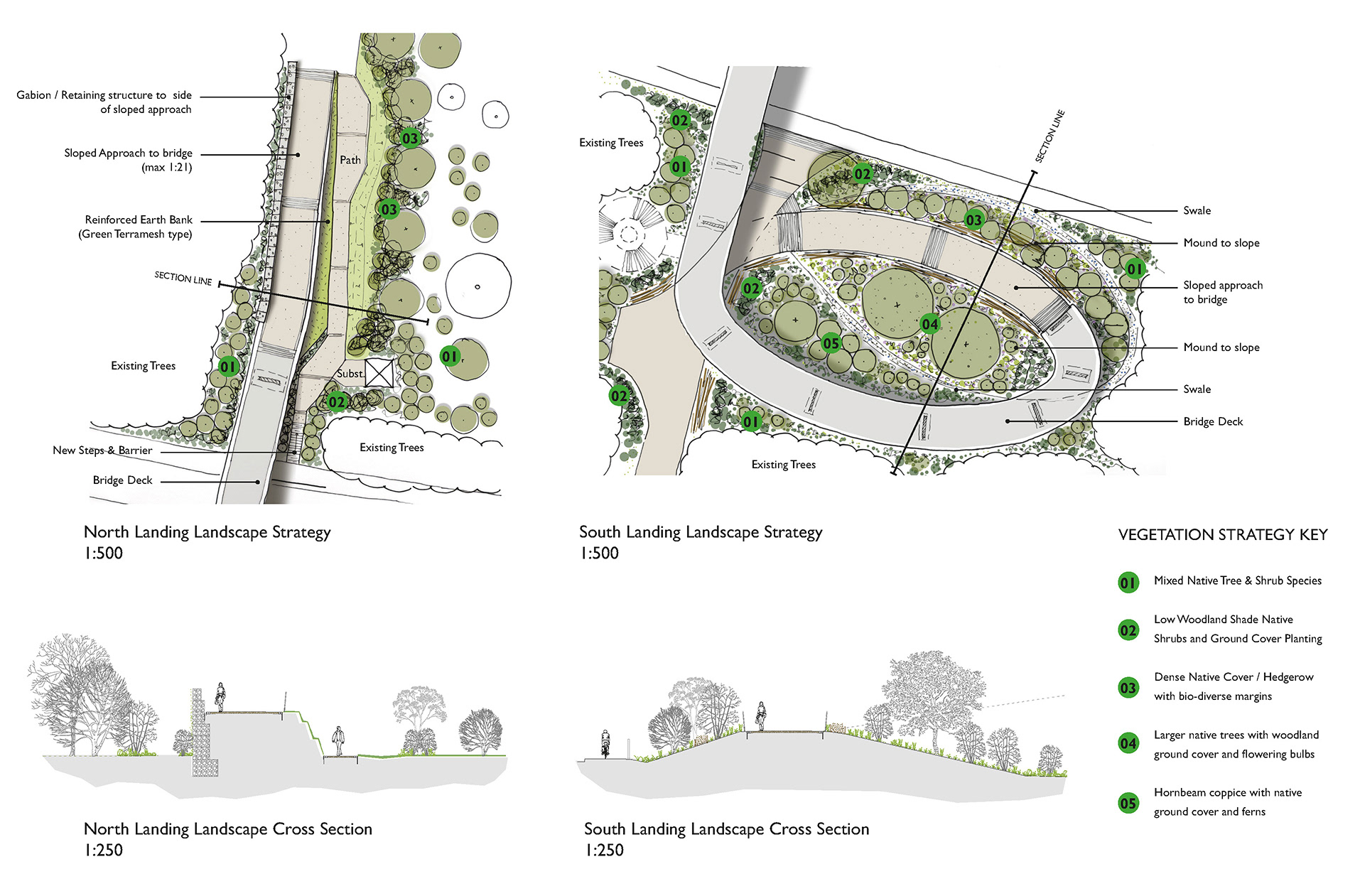
The proposals feature green infrastructure enhancements at both bridge landings, with reinforced earth slopes, woodland buffers, and swales for sustainable drainage. Materials are chosen for low embodied carbon and accessibility, while vegetation includes native species such as Oak, Hornbeam Coppice, and Wild Service Tree, reflecting local ancient woodland ecology and contributing to Biodiversity Net Gain.
The scheme was a runner up in the National Highways Low-Carbon Bridge Design Competition.