
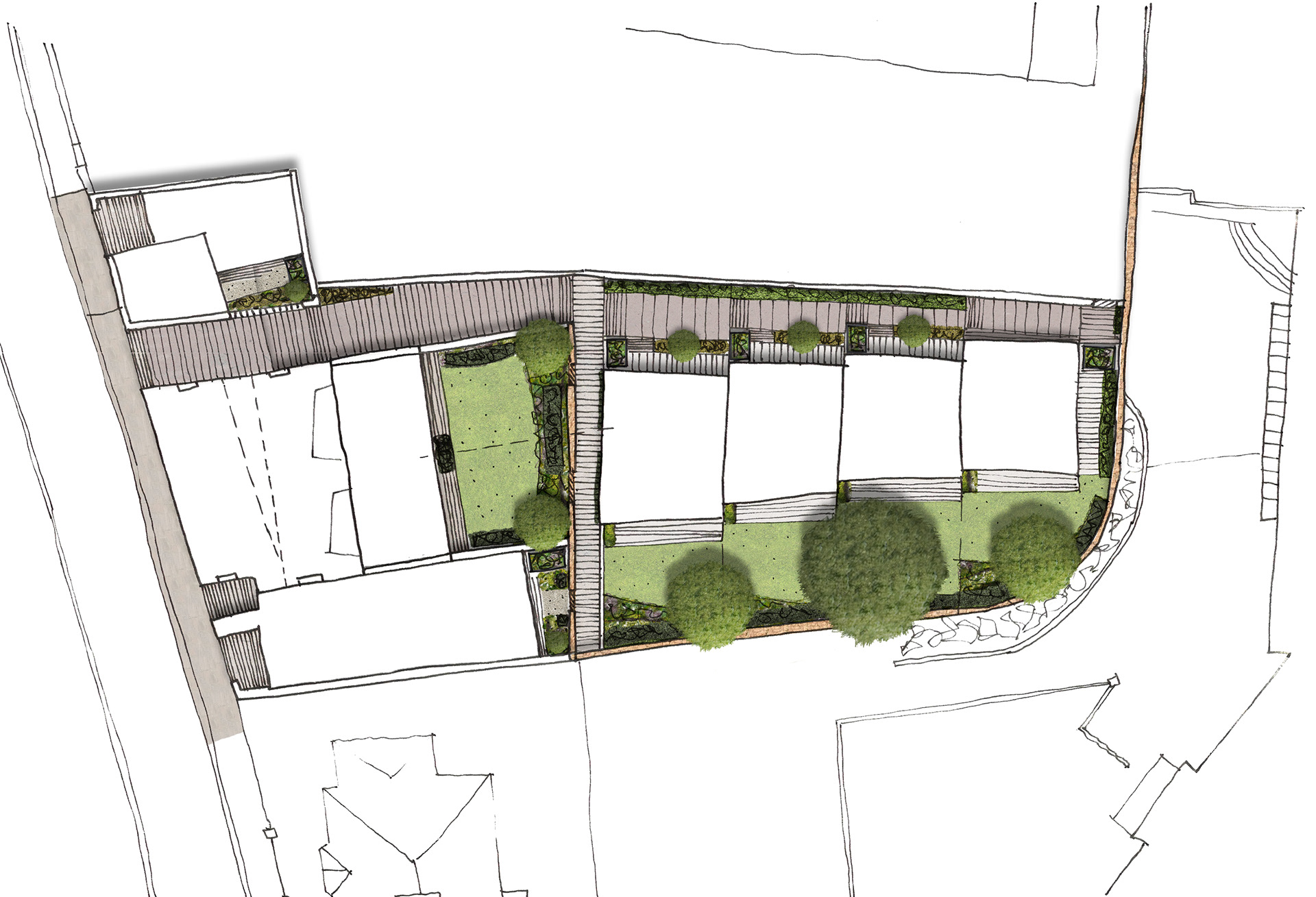
Architecture for communal living by Studio Otto. This sustainable landscape design project in Jersey restores and enhances the site's historic garden character while contributing to urban greening, biodiversity, and climate resilience. Key heritage assets, including existing granite walls, are carefully retained and celebrated, reinforcing local identity and sense of place. Functioning as an important ecological 'stepping stone' within the wider green infrastructure network, the landscape enhances habitat connectivity between nearby green spaces and supports biodiversity across the urban environment.
A layered landscape architecture approach creates a series of distinctive yet interconnected outdoor spaces. The setting of the listed building is defined by formal gardens featuring native and ornamental planting, hedges, espalier fruit trees, and climbing plants that reflect the site's heritage. More intimate courtyard gardens incorporate permeable planting, rain garden planters, and attractive communal spaces, while mews frontages are softened by small stature trees, species-rich planting, and structured hedgerows. Pollinator-friendly planting, orchard trees, and seasonally diverse landscapes contribute to ecological value, visual amenity, and year-round interest.
Sustainable Drainage Systems (SuDS) form an integral part of the design, with a series of multi-stage rain gardens managing roof water and surface water runoff from paved areas. These landscape interventions improve water quality, reduce flood risk, support urban cooling, and create valuable wildlife habitat. Together, the proposals demonstrate a landscape-led approach to sustainable development, creating a resilient, nature-rich, and inclusive environment for communal living while conserving the site's heritage significance and contributing positively to Jersey's green infrastructure and biodiversity objectives.